
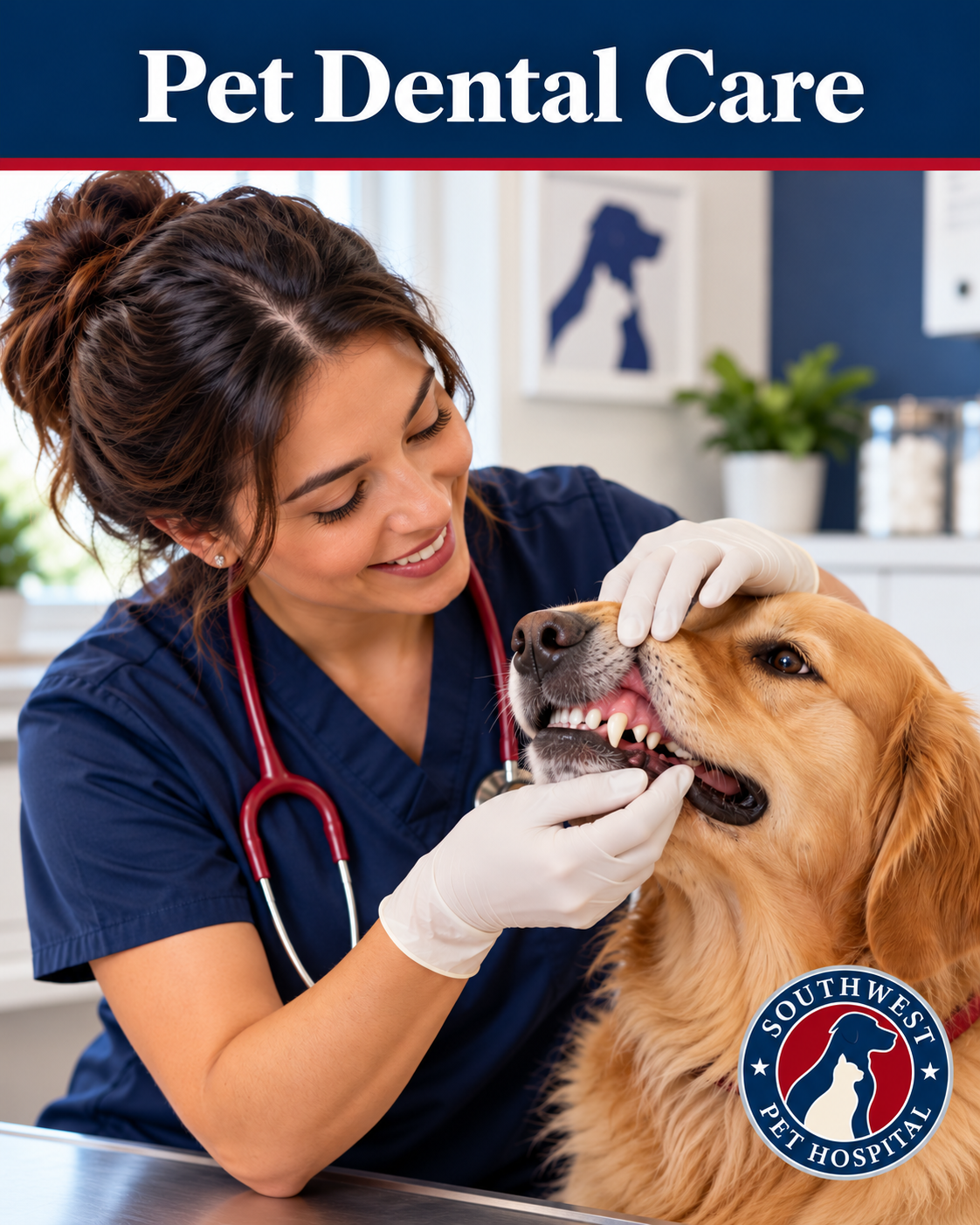
 Dental disease can cause pain long before a dog or cat stops eating. Bad breath, changes in chewing, and reduced grooming may be the first clues. Regular examinations and appropriate home care help protect your pet’s comfort and oral health.
At Southwest Pet Hospital in Springdale, Arkansas, we provide oral examinations, dental cleanings under general anesthesia, digital dental X-rays, and individualized treatment plans.
Why dental care matters
Plaque is a bacterial film that forms on teeth. Plaque that is not removed can mineralize into tartar. Inflammation may begin at the gums and progress to damage the tissues and bone supporting the teeth. Untreated disease can lead to infection, loose teeth, tooth loss, and chronic pain.
Oral infection and inflammation can also have implications for overall health. Treating dental disease relieves oral pain, addresses infection, and helps preserve comfortable chewing and quality of life.
Understanding periodontal disease
Veterinary periodontal staging describes the condition of each tooth and its supporting tissues:
- Stage 1 is gingivitis without loss of periodontal attachment.
- Stage 2 is early periodontitis with less than 25% attachment loss.
- Stage 3 is moderate periodontitis with 25-50% attachment loss.
- Stage 4 is advanced periodontitis with more than 50% attachment loss.
Different teeth in the same mouth can have different stages. Examination, periodontal probing, and dental X-rays under anesthesia help determine the extent of disease.
Signs your pet needs an examination
Contact us for persistent bad breath, red or bleeding gums, tartar buildup, drooling, dropping food, chewing on one side, pawing at the mouth, or changes in appetite. Cats may also groom less, hide, lose weight, or avoid foods they previously ate. Pets can continue eating despite significant dental pain.
Facial swelling, oral bleeding, or difficulty eating warrants prompt evaluation. These signs can have causes other than periodontal disease.
What professional dental care involves
An awake oral examination provides an initial assessment. A complete evaluation and cleaning require general anesthesia, with monitoring and pain management tailored to your pet. Care may include scaling above and below the gumline, probing, charting, digital dental radiographs, and polishing. Extractions or other treatment may be recommended when indicated.
Dental X-rays reveal tooth roots and surrounding bone that cannot be assessed by looking at the visible crowns alone. They help identify tooth resorption, retained roots, bone loss, and other painful conditions.
Home care between visits
Daily brushing with pet toothpaste is the most effective home method for controlling plaque. Introduce brushing gradually and ask us before brushing a painful mouth. Never use human toothpaste.
Veterinary dental diets, chews, and other products with the Veterinary Oral Health Council Seal of Acceptance can help control plaque and/or tartar, depending on the product’s accepted claim. Choose products appropriate for your pet’s size and chewing habits. Avoid very hard chews that can fracture teeth.
Frequently asked questions
How often does my pet need dental care? Oral health should be assessed during routine examinations. Cleaning intervals depend on your pet’s findings, breed, age, and home care.
Can brushing remove existing tartar? Brushing helps remove plaque but does not replace professional removal of established tartar or treatment below the gumline.
Do cats get painful dental disease? Yes. Periodontal disease and tooth resorption are important causes of feline oral pain.
Schedule a dental examination
If you notice changes in your pet’s breath, eating, or oral comfort, call Southwest Pet Hospital. We will recommend care based on your pet’s individual needs.
Contact Southwest Pet Hospital
1202 Henryetta Street, Springdale, AR 72762
479-751-5601 | southwestpethospital.com