
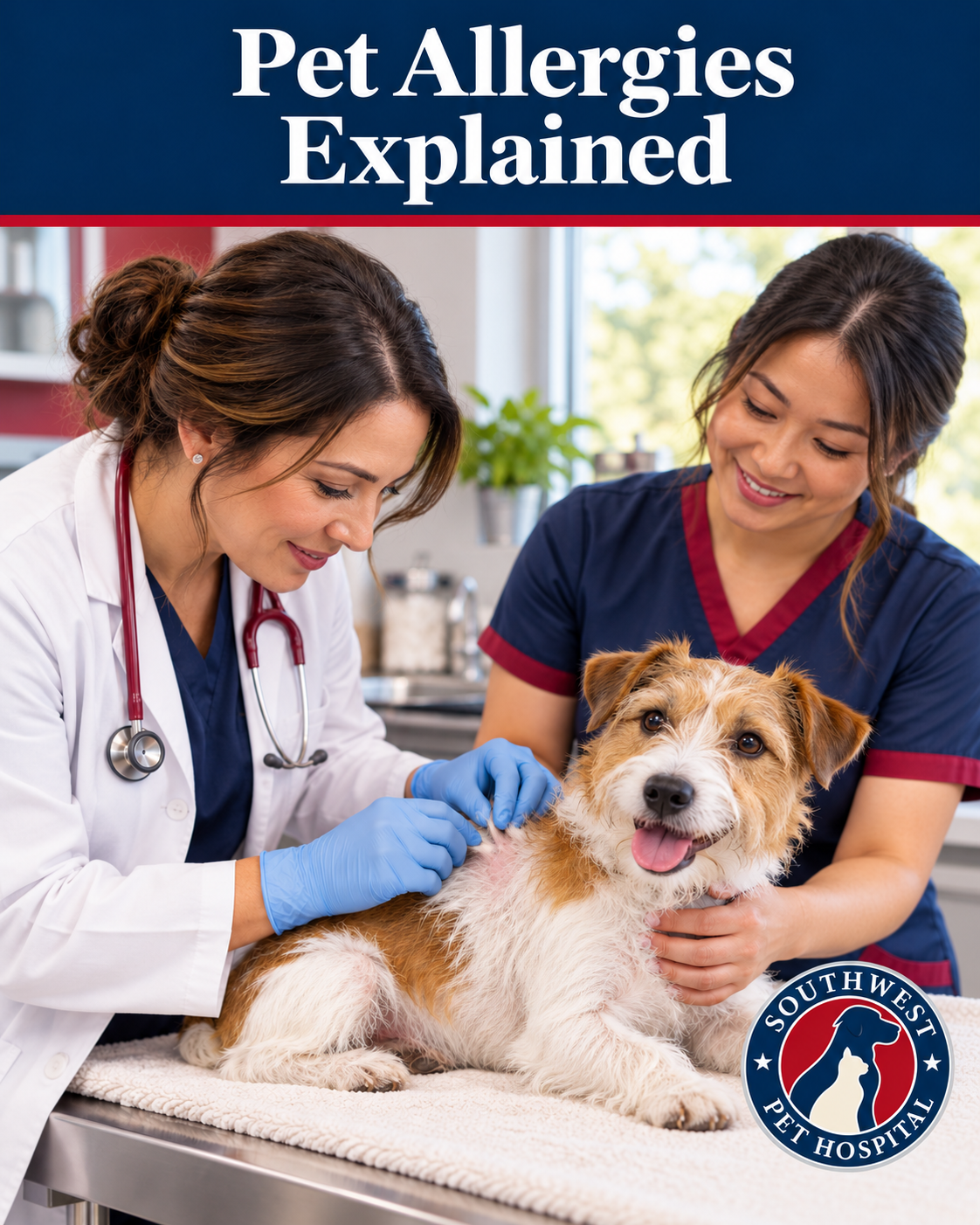
Persistent scratching, paw licking, recurrent ear problems, and excessive grooming can make life uncomfortable for dogs and cats. Allergies are one possible explanation, but parasites, infections, and other diseases can cause similar signs.
At Southwest Pet Hospital in Springdale, Arkansas, we use your pet’s history, examination findings, and appropriate testing to develop an individualized plan for relief.
Common types of allergies
Environmental allergies involve reactions to substances such as pollens, molds, and dust mites. They often affect the skin and ears. Signs can be seasonal or occur throughout the year.
Flea allergy dermatitis is a reaction to flea saliva. A small number of bites can cause substantial itching in a sensitive pet, even when owners do not see fleas. Consistent flea prevention for household pets is an important part of management.
Food allergies involve an immune response to dietary ingredients, usually proteins. They can cause itching, ear disease, and sometimes digestive signs. A pet can develop a reaction to food it has eaten previously.
Contact allergy is less common. Some products and chemicals can also irritate the skin without causing a true allergy, so identifying the exposure and examining the skin matter.
Signs to discuss with your veterinarian
Dogs may scratch, lick or chew their paws, rub their face, or develop red skin, hair loss, odor, hot spots, and recurrent ear infections. Cats may overgroom, develop bald patches or small scabs, or show itchy skin and ear irritation.
These signs are not diagnostic by themselves. Vomiting, diarrhea, sneezing, and watery eyes also have many possible causes and should not automatically be attributed to allergies.
How allergies are diagnosed
Evaluation begins with a detailed history and physical examination. Skin and ear cytology help identify secondary bacterial or yeast infections. Parasite evaluation and treatment are often needed before deciding whether allergies explain the remaining signs.
Environmental allergy is a clinical diagnosis made from compatible findings and exclusion of other causes. Blood or intradermal allergy testing does not, by itself, diagnose environmental allergy. After a clinical diagnosis, testing can help select allergens for immunotherapy.
Food allergy is assessed with a strict elimination diet followed by a dietary challenge. A veterinarian-selected hydrolyzed or novel-protein diet is commonly fed exclusively for about eight weeks, sometimes longer. Treats, table food, supplements, and flavored medications must be reviewed because they can interfere with the trial. Improvement on the diet and recurrence after a supervised challenge help confirm the diagnosis. Blood, saliva, and hair tests do not replace this process.
Treatment depends on the individual pet
Management may include year-round flea control, treatment of secondary infections, prescription anti-itch or anti-inflammatory medication, and skin or ear care. Medication selection depends on species, age, health history, and the underlying problem.
Allergen-specific immunotherapy may be appropriate for some pets with environmental allergy. Pets with confirmed food allergy need a diet that avoids their triggers. Bathing, bedding care, and practical environmental changes can support the overall plan.
Many pets achieve improved comfort with ongoing, individualized management. Follow-up visits help us assess response and adjust treatment.
Frequently asked questions
Can allergies be cured? Many require long-term management. The goal is to reduce itching, prevent complications, and maintain quality of life.
Can an indoor pet have allergies? Yes. Indoor allergens and fleas can affect pets that rarely go outside.
Should I give an over-the-counter allergy medication? Ask your veterinarian first. Some products are unsafe, contain additional ingredients, or are unlikely to help your pet’s condition.
Help your pet feel more comfortable
Call Southwest Pet Hospital if your pet has persistent itching, skin changes, or recurring ear problems. Earlier evaluation can help interrupt the cycle of inflammation and infection.
Contact Southwest Pet Hospital
1202 Henryetta Street, Springdale, AR 72762
479-751-5601 | southwestpethospital.com